


editor@ihma.ac.in
9860707767
logo

Re-IMAGINE The Journal for Hospitality, Tourism & Culinary Professionals

INSTITUTE OF HOTEL MANAGEMENT AURANGABAD

Re-IMAGINE The Journal for Hospitality, Tourism & Culinary Professionals

Advancing knowledge through rigorous peer-reviewed research across multiple disciplines. Join the global community of scholars shaping the future of academic discovery.

📢 Latest Update: Call for papers for Inaugural Issue:- New Hospitality , Culinary Trends & Practices - Submit by July 15, 2026

📢 Latest Update: Call for papers for Inaugural Issue:- New Hospitality , Culinary Trends & Practices - Submit by July 15, 2026

Important Journal Details

Title:
Re-IMAGINE The Journal for Hospitality, Tourism & Culinary Professionals
Journal Short Name:
JHTCP
ISSN:
Applied
Year of Establishment:
2026
Frequency of the Publication:
Half-Yearly (2 Issues / year)
Publication Format:
Online
Publication URL:
https://journalihma.org
Related Subject:
HospitalityTourismCulinary Arts
Language:
English
Editor-in-Chief:
Prof. Pushpesh Pant, (Padma Shri)
Editorial Board:
Click Here →
Journal's Email ID:
editor@ihma.ac.in

Download Forms & Formats

Download Hub

Publisher Details

Responsible Person Name:
Dr. Saurabh Krishna
Name of Publishing body:
Institute of Hotel Management Aurangabad
Publisher Website Url:
https://ihmaurangabad.ac.in
Address:
IHM-A, Dr. Rafiq Zakaria Campus, Rauga Bagh, Aurangabad, Maharashtra - 431001

Journal Features

Rigorous Peer Review

All submissions undergo thorough evaluation by experts in the field to ensure quality and validity.

Global Reach

Published papers reach an international audience of researchers, academics, and industry professionals.

Rapid Publication

Efficient review process ensures timely publication of accepted papers without compromising quality.

Open Access

All published papers are freely accessible online, maximizing visibility and impact of your research.

Publication Process

1

Prepare Manuscript

Format your paper according to our guidelines

View Guidelines
style="fill: var(--journal-600);"
2

Submit Paper

Upload your manuscript through our system

Submit Now
3

Peer Review

Your paper undergoes expert evaluation

Learn More
4

Publication

Accepted papers are published worldwide

View Publications
View All Issues
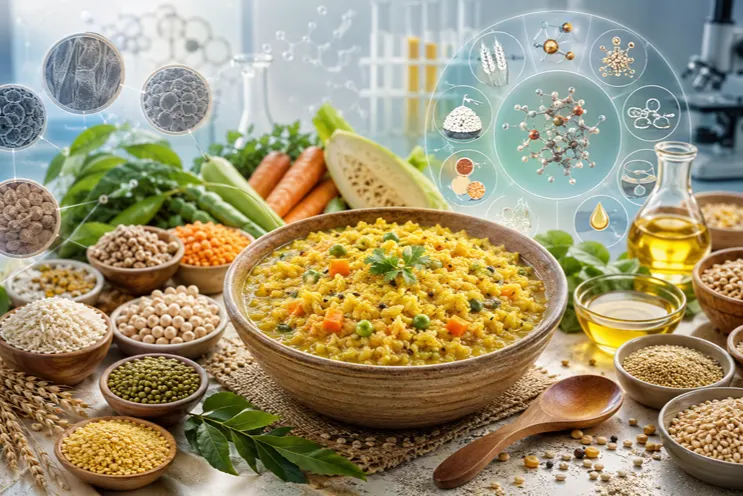
Cover image for Investigating the Role of Grains, Pulses, Thermal Time, and Lipids in preparing the Nutritionally Complete and Perfect Khichdi

Investigating the Role of Grains, Pulses, Thermal Time, and Lipids in preparing the Nutritionally Complete and Perfect Khichdi

Dr. Zubin D’Souza

For a structurally sophisticated dish such as khichdi, we have done it a great disfavour by equating it to comfort food or food to be served to convalescing individuals. Sometimes khichdi also gets relegated to the role of being considered a culinary minimalist creation. In the arguments put forward through this article, the author intends to demonstrate that despite the general nonchalance afforded to khichdi, it will be very evident after examining all the data available at hand that a khichdi is actually a complex, nutritionally engineered product that uses various interdependent variables that are set within the framework of a coherent food system. These variables are and are not limited to the demonstration of an amalgamation of grains, pulses, spice architecture, a lipid medium, and thermal duration function as a coalescing unit for interdependent variables within what is technically an extremely coherent food system. The endurance of khichdi as a beloved food of the masses, a fact that skips the typical roadblocks of class and in the Indian context, the class system points to a culinary dish that should not be viewed as a simple combination of ingredients but as a symbol of empirical precision that is built into and embedded within essential culinary practice. The fascination with khichdi is enhanced by a simple and logical look at its longevity at being at the centre of research. A basic khichdi is composed of very few ingredients and yet it has remained relevant both culturally and physically across varying contexts. It has remained constant despite changes in culinary trends and fashions, shifts in nutritional paradigms and beyond the evolution of agricultural systems. The khichdi has also traversed and stayed consistent within the frameworks of modern nutritional discourses and stretching way back to Vedic period ritual economies via route of British colonial reimagination, and Mughal royal kitchens. This is easily demonstrated by the fact that the variables themselves ensure that the decision to work out as to what could be a ‘perfect’ khichdi could be arrived at more from a contextual lens rather than one that is universal. Because, to these variables, we can also add individual digestive states and capacities, sociocultural framing, and specific metabolic demand of individuals. From the ancient texts that have focused on glycaemic modulation, complementarity of the cereal and pulses and their ratios, and a bioavailability of phytochemicals that appear to be lipid-mediated, to the latter-day dismissal by British historians as a ‘humble porridge’, Indo-Persian records and contemporary nutritional science that believes it to be a superfood, the multi-faceted complexities of a khichdi need to be unravelled in a phased manner. This research paper aims to work on one such specific aspect.
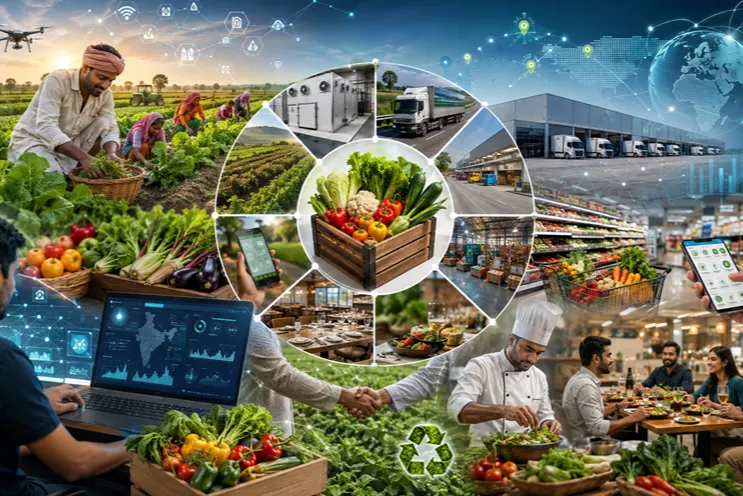

Cover image for Examining the Critical Role of Supply Chain Management in the Success of Farm-to-Table Systems in India

Examining the Critical Role of Supply Chain Management in the Success of Farm-to-Table Systems in India

Chef Thottapayil Pramod

The wastage of vegetables and fruits in the Indian farm sector is believed to be one third of the total produce. Supply chain management plays a vital role in controlling such wastage. The supply chain management in India used to be weak with its own inherent contradictions. While it has taken great leaps in the past decade, it is necessary to study the areas that needs attention as India is an agriculture-based economy to a large extend and is in its path to economic consolidation globally. This paper looks at the management of supply chain in general and the challenges it faces in the specific context of Farm to Table model of food facilities in India. The aim is to identify the challenges supply chain management faces as a whole and peruse it further to understand with respect to Farm to Table model in India, suggesting possible solutions for its restructuring. The paper looks at the evolution of Farm to Table concept and its status in Indian scenario. It reviews the multiple challenges that Supply chain faces and categorises them under four distinct headings. For this purpose, the researcher has adopted secondary research only, perusing papers already published on the subject for information. Journal articles, case studies, industry reports and government publications were the main source selected. A general criterion of sticking to articles that are not more than 10 years old is followed to ensure that the information is latest and reflect contemporary scenario. A comparison of the information from different articles were carried out to assess the gaps. Review of literature has thrown up some major findings. Farm to table concept as such has great potential for community development and financial empowerment of the locals. A shorter and efficient food supply chain leads to reduced carbon foot print, fresher produce and high quality of output. It reduces the middlemen and results in farmer wellbeing. On the food facility side, an efficient food supply chain would help in better menu design, addressing seasonal variability and balancing supply-demand quotient. It is found that investments in technology in food supply chains has picked up in the recent times in the country, such as cold storages and refrigerated transport systems, leading to less wastage and better quality. Adoption of advanced quality control systems such as block chain technology and IoT has led to improvement in traceability leading to heightened food safety standards. However, challenges of technological competence, cost considerations and regulatory frameworks are issues still persisting. In recent times supply chain automation and AI driven management systems are introduced. But there is competence gap that need to be addressed. While the supply chain remains fragmented in the country to a large extent, considerable work is done by the government for its improvement such as introduction of e-NAM. Overall, the growth trajectory is encouraging with specific areas...

Cover image for Assessing the Importance of Electric Vehicles in Advancing Sustainable Tourism and Hospitality: A Case Study of IHCL (Indian Hotels Company Limited)

Assessing the Importance of Electric Vehicles in Advancing Sustainable Tourism and Hospitality: A Case Study of IHCL (Indian Hotels Company Limited)

Mr. Prasad Nawale, Dr. Saurabh Krishna

Sustainability should not only be considered as a buzzword but rather a strong way to showcase your commitment and overall desire to play a crucial role in preserving the planet for the future generations. India has always been a ‘Vishwa Guru’ ‘Global Leader’ when it comes to the commitment for the sustainability, ecofriendly behavior and overall respect and sensitivity towards Mother Nature for thousands of years. Indian hospitality industry has also showed its commitment in the last few decades by adopting ecofriendly products, using renewable source of energies, creating awareness about the commitment towards clean and green planet and relying on the principles of 3 R (Reduce, Re use & Recycle). Further the Indian government’s commitment to achieve carbon neutrality by 2070 is strongly supported by all the industries, which is highly appreciated by the global economies. The current research attempts to highlight the demand of new upcoming concept of ‘Greener Holidays’ which have made sustainable mobility the need of an hour, where almost all domestic and global hospitality chains are striving to tap this upcoming segment. Sustainable mobility is going to be the major revolution in the tourism & hospitality industry and IHCL i.e. Taj group of Hotels have already gone out of the way to tap this segment showcasing their strong commitment towards sustainability and ESG framework. IHCL and its commitment towards nature and sustainability is highly commendable, and further the promotion of EV vehicles will reposition the brand IHCL as a major contributor of sustainability. The major objective of the research is to study the scope, and potential of sustainable mobility and EV vehicles in the Indian tourism & hospitality industry. The study also attempts to highlight the commitment of Taj group towards sustainability under Paathya initiative and its impact on overall brand image of IHCL. The study is qualitative in nature and used case study method by taking IHCL as the company to understand scope and potential of sustainable mobility and the use of EV vehicles in the Indian hospitality industry context. The major findings of the study highlights that EVs are the future of the mobility in the Indian tourism & Hospitality industry and IHCL has played a major role in showing its overall commitments towards sustainability under ‘Paathya Initiative’ and how sustainable mobility even contributes for the brand image & customer satisfaction. The present study is highly applicable in the current scenario of the Indian Tourism & Hospitality Industry as the industry is going through a major transformation especially in the field of transport and mobility.

Publication Process

Learn about our 4-step publication process

Submission Guidelines

Review requirements before submitting

Submit Article

Ready to submit your research?

6
Published Articles
1,523
Active Researchers
195
Countries
4.2
Impact Factor
Whatsapp